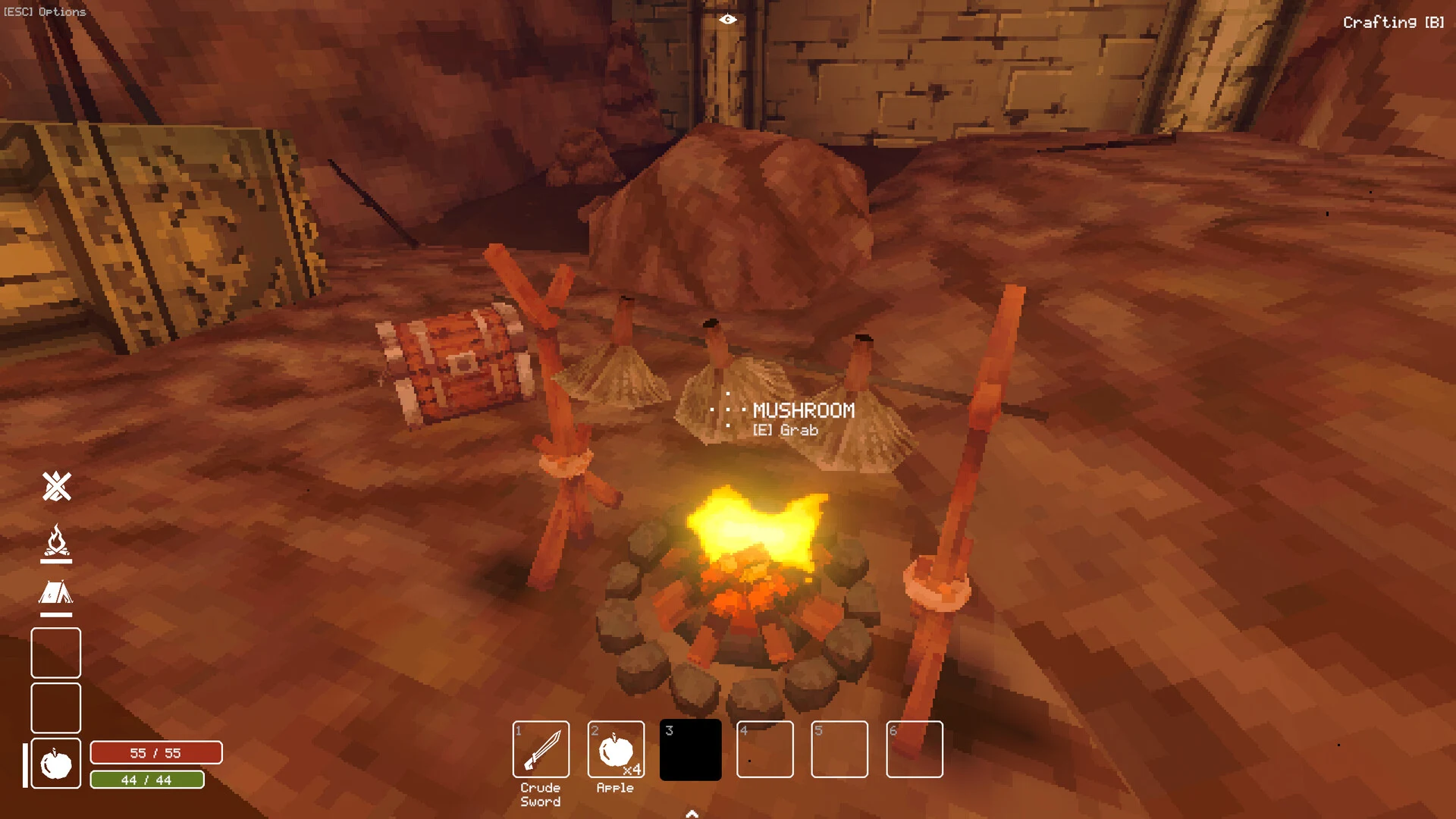
- Cooking pot: The core station that turns gathered ingredients into meals supporting health and stamina.
- Best timing: Cook before committing to deeper or unfamiliar dungeon sections, not mid-fight.
- Meal types: Health-focused dishes suit combat routes; stamina-focused dishes suit traversal-heavy routes.
- Resource discipline: Keep ingredient reserves instead of cooking everything immediately.
- Co-op advantage: Coordinate who carries which meals so the party covers both health and stamina needs.
What the Cooking Pot Does in Deep Dish Dungeon
The cooking pot is the heart of the preparation loop in Deep Dish Dungeon. Behold Studios' dungeon crawler is not just about combat and puzzles — it ties exploration, gathering, crafting, and cooking into a single cycle. Ingredients you collect while moving through rooms and side passages become meals at the pot, and those meals directly affect how well you manage health and stamina on longer runs.
Video Highlights:
- Official overview of the exploration, gathering, and cooking loop
- How camp cooking supports dungeon expeditions
- Single-player and up-to-3-player co-op preparation
At its core, the pot serves one purpose: converting raw ingredients into food that improves your odds of survival. While the game had not yet fully released at the time of writing (official date: October 13, 2026, per Raw Fury), the Demo already showcases the full cooking loop, and the system connects directly to the game's stamina-based traversal and combat encounters.
Skipping the cooking pot before a deep run is one of the most common beginner mistakes. Meals give you a buffer for mistakes — extra health for dangerous encounters and stamina for repeated movement, puzzle interaction, and ability-based traversal.
Cooking Pot Fundamentals: Location, Fuel, and Workflow
Where You Cook
Cooking happens at your preparation area — the safe camp space you return to between dungeon attempts. The workflow is straightforward but requires discipline about when and what you cook.
| Stage | When It Happens | What You Do | Priority |
|---|---|---|---|
| Ingredient gathering | During every route | Collect food materials from rooms and side paths | High |
| Inventory review | Back at camp | Sort ingredients, check reserves | Medium |
| Meal selection | Before a planned run | Cook meals matching the route's challenges | High |
| Cooking | At the camp pot | Convert ingredients into dishes | High |
| Reassessment | After each run | Adjust the next cooking plan based on what ran out | Medium |
The Cooking Workflow
Gather While Exploring
Treat ingredient collection as part of normal movement, not a separate chore. Check side rooms, corners near puzzles, and resource-rich areas along your route.
Identify the Next Objective
Decide what your next run needs: recovery for combat, stamina for traversal, or a balanced mix. This determines which meals to prioritize.
Cook at Camp
Prepare food in the safe area before departing. Cooking mid-run is rarely an option, so batch your preparation.
Pack a Balanced Loadout
Carry a mix of health-supporting and stamina-supporting dishes when the route contains multiple challenge types.
Review After the Run
Note which meals were consumed, which ingredients ran scarce, and what blocked progress. Feed that back into the next cooking cycle.
Do not convert every ingredient into meals the moment you return to camp. Some ingredients are better held in reserve so future recipes and unexpected situations remain covered. A small stockpile keeps your next preparation cycle flexible.
Meal Types and Food Effects
Food in Deep Dish Dungeon supports two primary pillars: health management and stamina management. Choosing the right category for your route is more valuable than simply cooking the most dishes possible.
| Meal Category | Best Used Before | Primary Benefit | Practical Tip |
|---|---|---|---|
| Health-focused food | Combat-heavy routes, post-damage recovery | Larger margin for mistakes in fights | Keep 1-2 recovery meals unspent at all times |
| Stamina-focused food | Traversal, puzzles, extended exploration | Sustained movement and interaction | Pick these when navigation is the main challenge |
| Balanced meals | Mixed routes with combat and puzzles | Covers both health and stamina needs | Ideal default for unfamiliar areas |
| Cheap filler dishes | Short, low-risk trips | Prevents wasting rare ingredients | Save premium ingredients for deep runs |
Matching Meals to Route Type
Combat Expedition
- Health-focused meals first
- Recovery options in quick-access slots
- Cook after assessing enemy density on the route
Exploration Run
- Stamina-focused meals
- Balanced backup dish
- Prioritize routes with puzzles and backtracking
Deep Push
- Mixed loadout of both types
- Reserve rare ingredients here
- Only attempt with full preparation
In co-op (up to 3 players), coordinate meal responsibilities. One player carrying health dishes while another carries stamina dishes prevents duplication and stretches shared ingredients across the whole party.
Ingredient Management and Gathering Routes
Efficient cooking starts with efficient gathering. Because Deep Dish Dungeon's dungeons are handcrafted rather than randomly generated, ingredient locations are learnable — repeat runs through the same sections let you build reliable gathering patterns.
| Ingredient Practice | Description | Rating |
|---|---|---|
| Gather consistently | Collect during every route instead of only when supplies are low | ★★★★★ |
| Learn node locations | Handcrafted rooms mean ingredients reappear in the same areas | ★★★★☆ |
| Prioritize by plan | Collect based on the meals your next run needs | ★★★★★ |
| Keep reserves | Do not spend every material immediately | ★★★★☆ |
| Avoid risky detours | Do not gamble on hazardous rooms for low-value ingredients early | ★★★☆☆ |
Ingredient Priority Checklist
Pre-Run Cooking Preparation:
- Review remaining ingredient stock at camp
- Identify the main challenge of the next route
- Cook meals matching that challenge type
- Keep at least one recovery meal unspent
- Coordinate meal loadouts with co-op partners
The same gathering loop feeds both crafting and cooking. Plan your inventory around the full expedition — tools and meals come from the same material pool, so balance what you craft against what you cook before each run.
Common Cooking Mistakes to Avoid
Even experienced players fall into habits that waste ingredients or leave them underprepared. These are the most frequent errors seen around the cooking pot:
| Mistake | Consequence | Fix |
|---|---|---|
| Cooking everything at once | No flexibility for unexpected needs | Cook in batches per objective |
| Ignoring stamina meals | Failures on traversal-heavy routes | Always carry one stamina dish |
| Gathering only when empty | Forced into runs without food | Collect on every route |
| Same loadout every run | Wasted meals on easy routes | Match meals to route type |
| Solo hoarding in co-op | Party members left unprepared | Share meal responsibilities |
If a fight leaves your party low on health or meals, retreating to camp to cook and craft is a valid strategy — often better than pushing deeper underprepared. Deep Dish Dungeon rewards preparation cycles, not one-attempt clears.
FAQ
Q: What is the cooking pot used for in Deep Dish Dungeon?
The cooking pot converts ingredients gathered during dungeon exploration into meals that support health and stamina management. It is the central station of the game's preparation loop, used at camp before committing to deeper dungeon sections.
Q: When should I cook in Deep Dish Dungeon?
Cook before entering a deeper or unfamiliar area, while you are in a safe preparation space. Cooking is part of pre-run planning — prepare health-focused meals for combat routes and stamina-focused meals for traversal-heavy routes.
Q: Can I cook during a dungeon run?
Preparation is centered on your camp area between attempts. Plan meals ahead of time rather than expecting to cook mid-run, and retreat to camp if a run leaves you underprepared.
Q: How does cooking work in co-op play?
In co-op (up to 3 players), coordinate meal preparation so the party carries a mix of health and stamina dishes. Discuss ingredient and resource decisions openly to preserve supplies for the rooms that need them most.