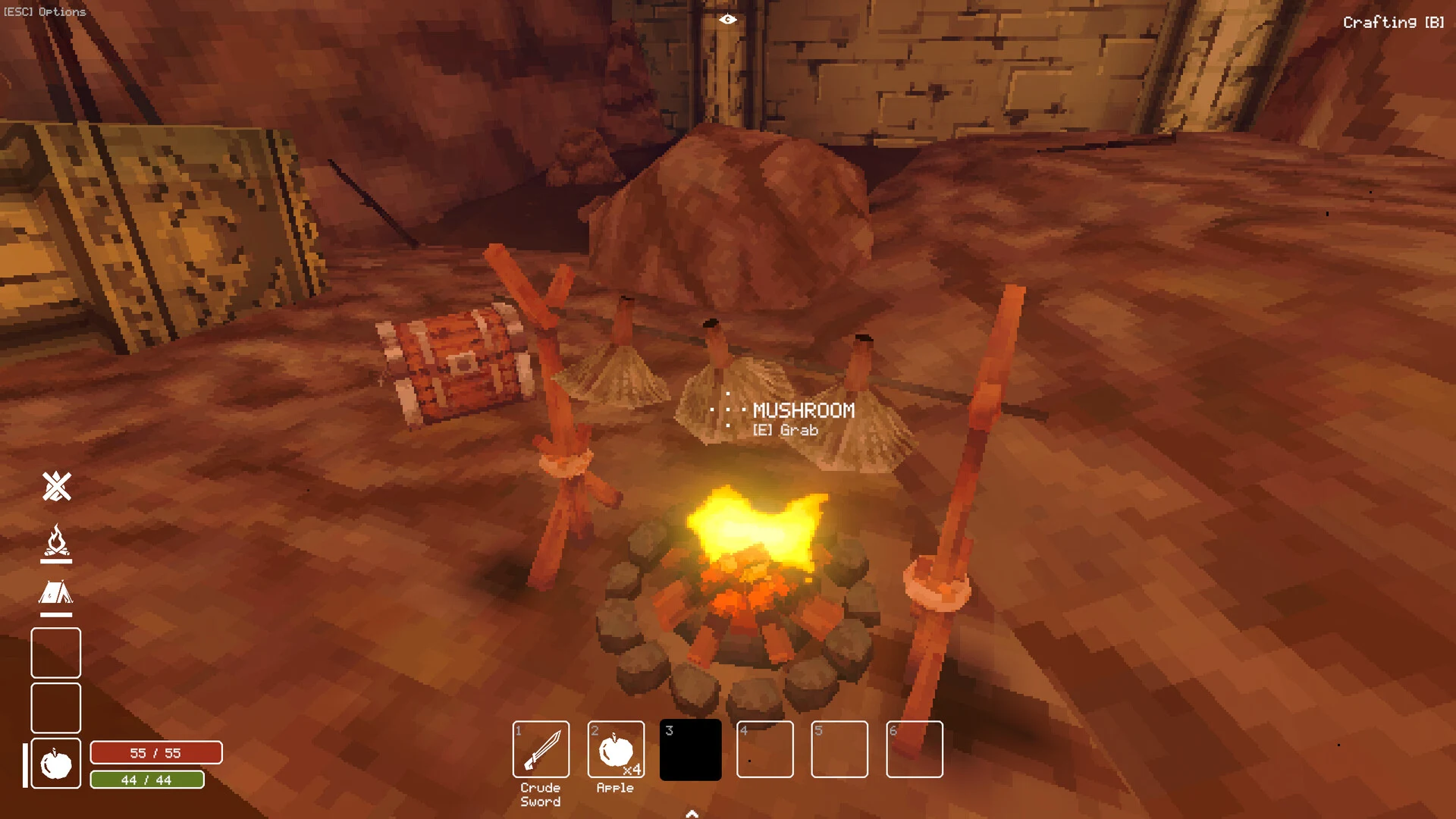
- Leather is a core crafting material gathered during dungeon exploration in Deep Dish Dungeon.
- Consistent gathering along explored routes beats emergency farming before a big run.
- Craft with purpose: save leather for tools and gear that unlock your current bottleneck.
- Co-op teams should assign one player as the dedicated resource collector per run.
- Revisit early areas after gaining new abilities—previously unreachable spots often hide materials.
What Leather Is Used For
In Deep Dish Dungeon, progression is built on a loop of exploration, gathering, cooking, and crafting. Leather sits inside that loop as a practical crafting material: a durable resource used to support equipment and exploration supplies rather than something you consume directly. Because the dungeon rewards preparation over raw aggression, materials like leather determine how far a single expedition can go before you are forced back to camp.
The game's handcrafted dungeon design means resource distribution is deliberate. Side rooms, passages near environmental puzzles, and less obvious branches tend to hide useful materials, while the main path leans toward encounters and puzzle set pieces. Treat leather gathering as something you do while exploring, not as a separate chore.
| Material Role | What It Supports | When You Need It Most |
|---|---|---|
| Crafting input | Tools, equipment, exploration supplies | Before deeper dungeon sections |
| Preparation stock | Reserve for future recipes | After each run, at camp |
| Trade-off resource | Spend now vs. save for later | Whenever a recipe unlocks |
Deep Dish Dungeon rewards players who prepare before committing to a deeper area. Keep a small leather reserve at camp so a newly unlocked recipe never stalls your next run.
Where to Find Leather in the Dungeon
Because Deep Dish Dungeon uses handcrafted rooms with branching routes, reliable leather farming comes from route discipline rather than grinding a single spot. The strongest approach is a loop: clear a familiar branch, check every side room and corner, then return to camp before pushing into unknown territory.
Sweep familiar branches first
Start each run in areas you have already mapped. Known rooms let you gather efficiently without burning health or stamina on surprises, and revisits often reveal interactive objects you missed the first time.
Check side rooms and puzzle edges
Materials cluster away from the main path. Examine passages near environmental puzzles, blocked routes, and room corners—these are the spots most players skip when rushing.
Note blocked routes for later
When you find a passage you cannot open, remember it. Ability-based progression means new tools and abilities can reopen old areas, and those returned-to rooms frequently hold materials that were locked away earlier.
Return to camp before overextending
Bank your leather and other materials before attempting an unfamiliar section. A death deep in the dungeon costs more resources than an early, disciplined retreat.
If a fight leaves you low on health or resources, retreat, cook, and craft instead of pushing forward. Losing a deep run wastes every material you carried into it.
Leather Compared to Other Resources
Not every material deserves equal inventory space. Understanding where leather fits among Deep Dish Dungeon's resource types helps you decide what to pick up, what to store, and what to leave behind when your pack fills up.
Leather
- Crafting backbone for durable gear
- Gathered along explored routes
- Worth stockpiling between runs
Ingredients
- Feeds the cooking system
- Supports health and stamina recovery
- Best used before long expeditions
General Materials
- Fuel tools and exploration supplies
- Often tied to immediate obstacles
- Spend on the current bottleneck first
| Resource Type | Primary System | Priority Rule | Storage Advice |
|---|---|---|---|
| Leather | Crafting | Save for gear that removes current blockers | Keep a reserve at camp |
| Ingredients | Cooking | Cook before deep or combat-heavy routes | Carry balanced meals |
| Tool materials | Crafting | Spend on the next obstacle, not every option | Keep minimal buffer |
| Recovery items | Survival | Reserve for unavoidable encounters | Never auto-spend |
Crafting and cooking draw from the same gathering loop. Plan your inventory around the full expedition—crafted gear and meals are parts of one preparation cycle, not separate systems.
Crafting With Leather: Priority Framework
The most common mistake with any limited material is crafting without a purpose. Before spending leather, identify what is actually limiting your progress: survival, recovery, combat readiness, traversal, or access to a blocked route.
Identify the bottleneck
Ask what stopped your last run. If enemies were the problem, leather toward protective or combat-support gear. If a route was the problem, prioritize traversal or access items.
Craft for the route ahead
Prepare for the specific branch you plan to attempt, not every possible situation at once. Early game materials are too scarce for speculative crafting.
Pair crafting with cooking
A well-prepared expedition combines gear and food. Health-supporting meals for combat routes, stamina-supporting meals for traversal-heavy exploration.
Review after every run
After returning, check what was consumed, what blocked you, and what was scarce. Adjust the next crafting plan from that data—even failed runs improve your preparation cycle.
Every run should improve the next preparation cycle, even when it does not reach a new area. Consistent leather reserves turn early struggles into steady progression.
Co-op Leather Farming and Division
Deep Dish Dungeon supports solo play and online co-op with up to three players total, and coordinated parties gather materials noticeably faster than solo players. The key is assigning roles before entering unfamiliar sections.
| Team Role | Responsibility | Leather-Related Task |
|---|---|---|
| Scout | Leads exploration, marks routes | Flags side rooms worth sweeping |
| Gatherer | Collects materials and ingredients | Primary leather collector per run |
| Support | Manages combat and recovery | Protects gathering in dangerous rooms |
In co-op, resource decisions should be discussed openly. Agree on which leather-backed recipes the team is saving for before anyone crafts, so limited materials are not spent on duplicate gear.
Leather Farming Checklist
Per-Run Leather Routine:
- Sweep one familiar branch before entering new territory
- Check all side rooms and puzzle-adjacent passages
- Mark blocked routes to revisit after new abilities
- Bank leather and materials at camp before deeper sections
- Review consumption and bottlenecks after each run
FAQ
Q: Is leather required to progress in Deep Dish Dungeon?
Progression in Deep Dish Dungeon blends environmental puzzles, combat, cooking, crafting, and ability-based access to new areas. Leather supports the crafting side of that loop, so keeping a reserve helps, but blocked routes are often solved by new abilities and observation rather than materials alone.
Q: Where is the best place to farm leather?
There is no single farming spot. Because the dungeon is handcrafted, the most reliable method is sweeping familiar branches, checking side rooms and areas near environmental puzzles, and revisiting blocked routes after gaining new tools or abilities.
Q: Should I spend leather immediately or save it?
Craft with a specific purpose. Spend leather on items that remove your current bottleneck, and keep a small reserve so a newly unlocked recipe never stalls your next expedition.
Q: How does co-op change leather gathering?
With up to three players, assign one member as the dedicated gatherer while others scout and handle combat. Discuss crafting plans before spending shared materials to avoid duplicates.
For the latest official updates, recipes, and patch notes, follow the Steam news feed and the Raw Fury announcement page. The full game launches October 13, 2026 on Steam, Xbox Series X|S, Xbox PC, Xbox Cloud Gaming, and Xbox Game Pass, with a demo available now on Steam.