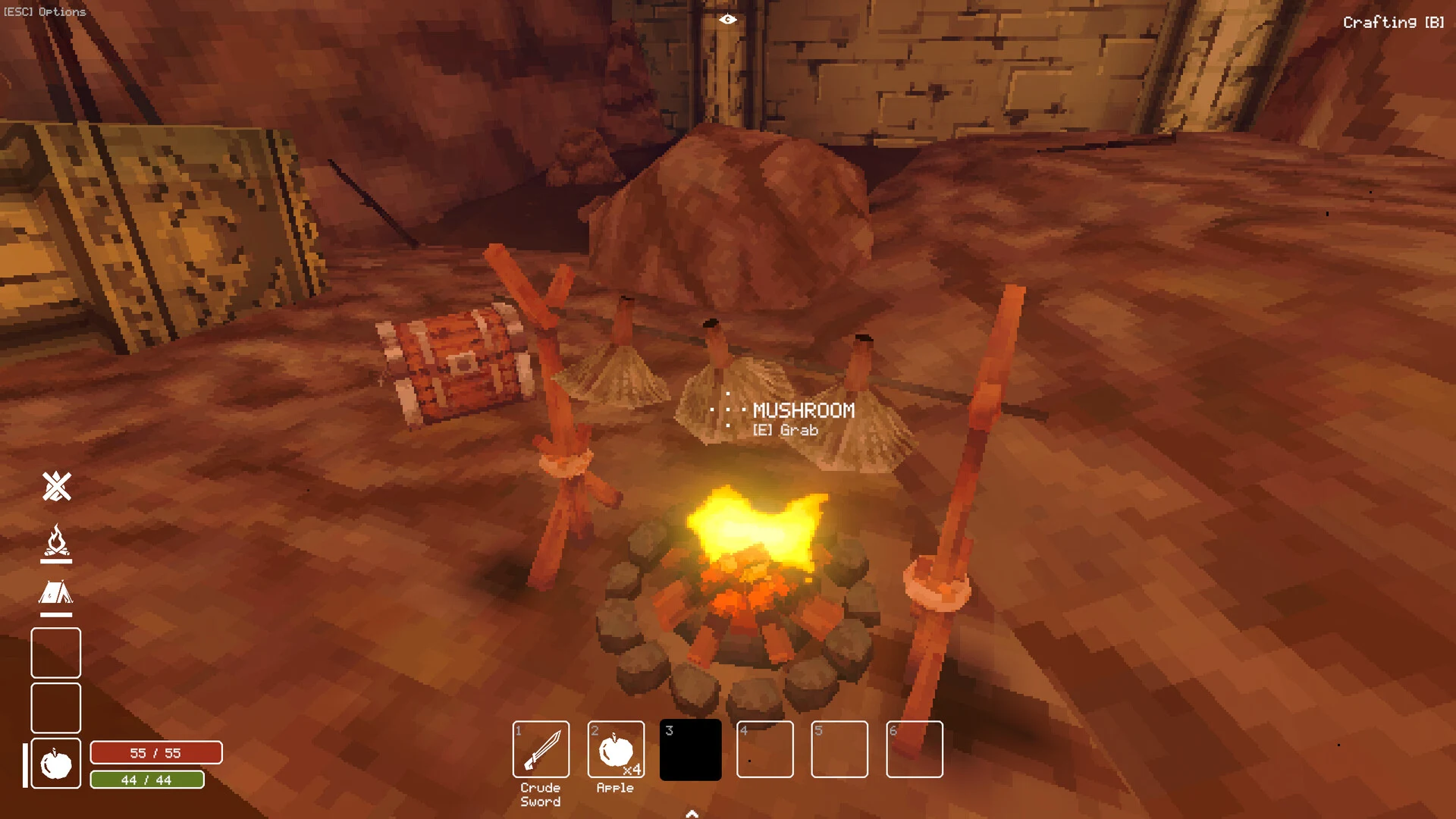
- Deep Dish Dungeon cooking table: The core station for turning gathered ingredients into meals at camp
- When to cook: Always prepare food before committing to deeper or unfamiliar dungeon sections
- Best practice: Match meals to your objective — recovery food for combat, stamina food for traversal
- Key habit: Keep an ingredient reserve instead of cooking everything immediately
- Co-op note: Coordinate with teammates so the party carries a balanced meal selection
What the Cooking Table Does
The cooking table is the heart of the preparation loop in Deep Dish Dungeon. Exploration fills your inventory with ingredients; the cooking table converts those ingredients into meals that support health and stamina management. Since the game's survival systems punish unprepared dives into deeper dungeon areas, treating the cooking table as an afterthought is one of the most common early-game mistakes.
Cooking connects directly to every other system in the game:
| System | How Cooking Supports It | Priority |
|---|---|---|
| Combat | Recovery meals give room for mistakes in dangerous encounters | High |
| Exploration | Stamina-supporting meals sustain long traversal routes | High |
| Puzzle solving | Longer effect windows help with slow, observation-heavy rooms | Medium |
| Crafting | Shared gathering loop supplies both meals and materials | Medium |
| Co-op play | Balanced party meals reduce pressure on shared resources | High |
Prepare meals before leaving your safe preparation area whenever possible. Cooking mid-run after taking damage usually means ingredients were wasted on an emergency instead of a planned meal.
Cooking Table Setup: Step-by-Step
Getting the most out of the cooking table follows a repeatable cycle. Run this workflow before every major expedition attempt.
Gather ingredients during exploration
Collect ingredients as part of your normal route rather than making it a separate trip. Check side rooms, paths near environmental puzzles, and resource-rich areas so future cooking options stay open. Gather consistently instead of waiting until supplies run low.
Return to your preparation area
Head back to camp or a safe cooking location before pushing into deeper sections. Review what you collected and identify which ingredients pair into useful meals for the next objective.
Identify the next objective's demands
Decide what will actually limit your progress: combat survival, recovery after damage, traversal stamina, or access to a blocked route. Cook with that specific purpose in mind.
Cook matching meals at the table
Convert ingredients into food that fits the planned route. Combat-heavy routes need recovery options; traversal and puzzle routes benefit from stamina support.
Reassess after each run
After returning, review which meals were consumed, which were wasted, and which ingredients ran short. Adjust the next cooking plan so every run improves the preparation cycle.
Avoid converting your entire ingredient stockpile immediately. Future recipes and longer expeditions may require reserves, and materials are limited in the early game. Keep a practical buffer for emergencies.
Food Types and When to Use Them
Meals from the cooking table generally serve one of two roles: supporting health or supporting stamina. Choosing the right type for the route is more valuable than simply cooking the highest-volume food available.
| Food Category | Best Timing | Main Purpose | Practical Tip |
|---|---|---|---|
| Health-focused meals | Before combat-heavy routes or after damage | Support health management during encounters | Keep recovery food available, don't spend every meal right away |
| Stamina-focused meals | Before traversal, puzzles, extended movement | Sustain repeated movement and ability-based exploration | Choose these when navigation, not fighting, is the main challenge |
| Balanced meals | Routes mixing combat, puzzles, and gathering | General-purpose support | Carry a mixed selection when the route varies |
| Emergency reserve | Any run | Prevents a failed expedition after setbacks | Store at least one recovery meal before entering unfamiliar areas |
Combat Run Loadout
- Recovery-focused meals for encounter mistakes
- One balanced backup meal
- Reserve ingredients for post-run cooking
Traversal Run Loadout
- Stamina-focused meals for long movement routes
- Light recovery option for hazards
- Prioritize ingredients found along the route
Mixed Expedition Loadout
- Balanced meal selection across both categories
- Higher total quantity for longer trips
- Party coordination in co-op to avoid duplicates
The strongest preparation habit is matching food preparation to the planned activity. A meal chosen for the route you are about to attempt consistently outperforms a random inventory of cooked items.
Cooking Table Strategy for Co-op
In cooperative play with up to three players, the cooking table becomes a shared resource decision. Parties that cook independently often duplicate meals and waste ingredients, while coordinated groups cover more situations with the same stockpile.
| Situation | Recommended Approach |
|---|---|
| Pre-run cooking | Discuss the route first, then assign meal types per player |
| During combat | Communicate before consuming limited recovery food |
| After a setback | Pool remaining ingredients and cook what the party needs |
| Resource disputes | Reserve important ingredients for unavoidable encounters |
Follow these coordination rules to keep the party efficient:
- Agree on a shared route before anyone cooks, so meals match the actual plan.
- Assign roles: one player carries recovery meals, another handles stamina support.
- Discuss openly before using rare ingredients at the cooking table.
- Treat puzzle rooms as group activities — a well-fed party solves them with less pressure.
Solo adventurers manage every decision directly, so keep a deliberate mix of health and stamina meals. Without teammates to cover gaps, a balanced inventory is your only safety net.
Pre-Expedition Checklist
Before every serious dungeon attempt, run through this preparation checklist at the cooking table.
Cooking Table Preparation:
- Gathered ingredients along the full exploration route
- Identified the next objective (combat, traversal, or mixed)
- Cooked meals matching the planned route type
- Kept at least one recovery meal as an emergency reserve
- Reviewed last run's consumption and adjusted quantities
- Coordinated meal assignments with co-op teammates
Even a run that fails to reach a new area should improve your next preparation cycle. Track what was wasted at the cooking table and refine the plan each time.
FAQ
Q: What is the cooking table used for in Deep Dish Dungeon?
The cooking table converts ingredients gathered during dungeon exploration into meals that support health and stamina management, making it central to preparation before longer or more dangerous runs.
Q: When should I cook food in Deep Dish Dungeon?
Cook before committing to deeper or unfamiliar areas, ideally at a safe preparation area. Cooking in advance prevents wasting ingredients on emergency meals mid-run.
Q: Should I prioritize health or stamina meals?
Choose health-focused meals for combat-heavy routes and stamina-focused meals for traversal, puzzle solving, or extended movement. Carry a balanced selection when a route mixes both challenges.
Q: How does cooking work in co-op mode?
In co-op, coordinate at the cooking table before each run. Assign meal types per player, communicate before consuming limited recovery food, and reserve important ingredients for unavoidable encounters.