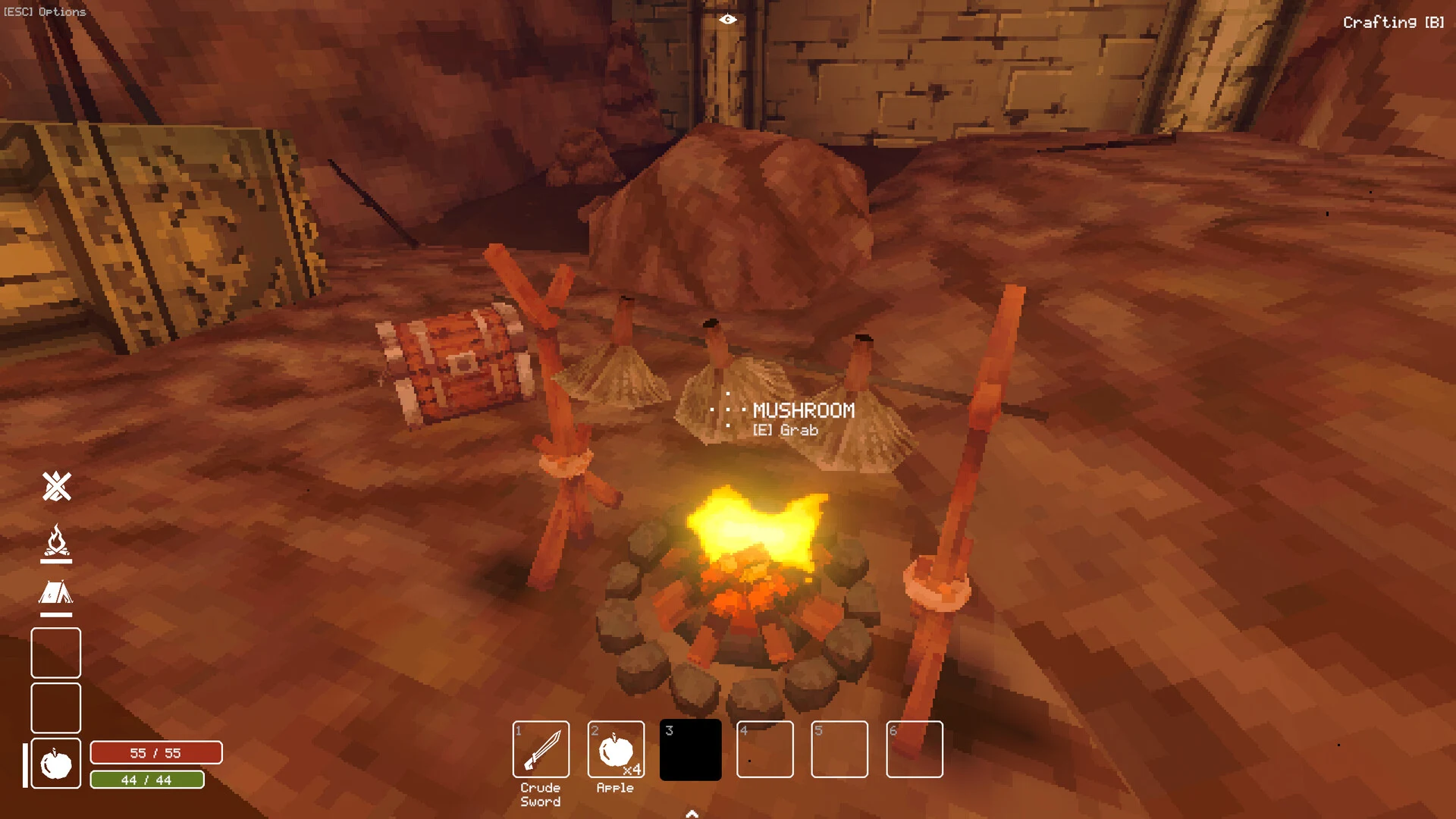
- Clay is a gathering resource in Deep Dish Dungeon tied to the crafting and cooking preparation loop.
- Where to look: damp cave floors, riverbank edges, and side rooms off the main dungeon path.
- Best habit: gather clay during every run instead of farming it only when a recipe needs it.
- Keep a reserve: future crafting recipes often demand more clay than one run provides.
- Co-op tip: assign one player to sweep side rooms for materials while others handle combat.
What Clay Is Used For
Clay sits inside Deep Dish Dungeon's core preparation loop: explore, gather, craft, cook, and push deeper. As a mineral-type resource, it typically feeds into early crafting recipes, cooking-related equipment such as containers and camp upgrades, and progression items that unlock previously blocked routes. Because the game follows a Metroidvania-like structure, resources you ignore on run one may become the exact bottleneck on run three.
The game's official Steam listing describes gathering and crafting as pillars of the survival loop, so treat clay as a long-term investment rather than a one-off pickup.
| Clay Use Category | Typical Purpose | Priority Early Game |
|---|---|---|
| Cooking equipment | Containers, camp cooking upgrades | Medium |
| Crafting tools | Utility items supporting exploration | High |
| Camp and base building | Storage and preparation structures | Medium |
| Puzzle or route unlocks | Items that interact with blocked passages | Situational |
| Trade or recipes | Ingredient in multi-material recipes | Medium |
Do not spend clay the moment you find it. Deep Dish Dungeon rewards players who keep a practical stockpile, because recipes discovered later often require materials you already passed by.
Where to Find Clay in the Dungeon
Clay follows the same spawn logic as other mineral resources in Deep Dish Dungeon: it appears in the environment rather than dropping from enemies. Focus your search on natural, low-traffic areas of the map rather than combat arenas.
High-probability clay locations:
- Damp cave floors and muddy corridors near water features
- Riverbanks and pool edges in side rooms
- Dead-end passages that most players rush past
- Areas near environmental puzzles, which often hide resource nodes
- Revisited zones after gaining new movement abilities
| Location Type | Spawn Likelihood | Access Difficulty | Notes |
|---|---|---|---|
| Damp cave floors | High | Low | Check along walls and corners |
| Riverbank edges | High | Low-Medium | May require light traversal |
| Side rooms | Medium | Low | Easily missed on fast routes |
| Puzzle-adjacent areas | Medium | Medium | Often guarded or hidden |
| Deep zones | Medium | High | Save for later runs |
Sweep Method
- Best for early runs
- Check every side room once
- Low risk, steady yield
Route Method
- Best for repeat farming
- Follow one efficient loop
- Return to camp when full
Co-op Method
- Best for 2-3 player groups
- One player focuses on gathering
- Others clear threats and scout
Hidden areas and resource nodes are easiest to miss when moving quickly between objectives. Inspect room edges, corners, and unusual terrain features before moving on, since the dungeon is handcrafted rather than randomly generated.
Step-by-Step Clay Farming Route
Follow this routine to collect clay efficiently without wasting a run on pure farming. The approach balances gathering with the exploration and cooking loop the game is built around.
Prepare Before Entering
Clear inventory space, eat a stamina-supporting meal if you plan extended traversal, and bring any gathering tools you have already crafted. Enter the dungeon with a purpose, not just a direction.
Sweep Side Rooms First
Move through damp corridors and riverbank side rooms nearest the entrance. These low-danger areas frequently hold clay nodes and ingredients, letting you stock up before committing to deeper sections.
Gather While Exploring
Treat clay collection as part of movement, not a separate chore. Check room corners, pool edges, and dead ends as you pass. Interact with anything that looks like disturbed earth or muddy ground.
Note Blocked Routes
When you find passages you cannot yet cross, remember them. New abilities unlock old areas, and those revisited zones often contain resource clusters you could not reach before.
Return and Reassess
Head back to camp, bank your clay, and review what blocked progress. Adjust the next run's plan around the recipes or tools that clay can support, then repeat the loop with better preparation.
Every run should improve the next preparation cycle, even if you do not reach a new area. A run that returns with full clay and ingredient stocks is a successful run.
Clay Farming Tips and Co-op Strategy
Solo and cooperative play change how you should approach clay collection. In co-op (up to three players), communication prevents wasted trips and duplicated effort.
| Scenario | Recommended Approach | Key Benefit |
|---|---|---|
| Solo early game | Sweep side rooms near entrance | Safe, repeatable income |
| Solo deep run | Gather only on the return path | Saves inventory space |
| 2-player co-op | Split: one gathers, one guards | Faster clearing of rooms |
| 3-player co-op | Rotate gatherer role each zone | Balanced resource share |
| Low health | Skip gathering, return to camp | Avoid losing carried clay |
Co-op coordination tips:
- Agree on a shared route before splitting up so nobody re-clears the same rooms
- Communicate before consuming limited healing or crafting resources
- Have the gatherer call out clay and ingredient locations for the group
- Reserve one player's inventory space for bulk materials
Choose your method based on what limits progress. If a crafting recipe needs clay, run a focused sweep. If survival is the bottleneck, gather opportunistically on the way back to camp instead.
Clay Collection Checklist
Before Your Next Clay Run:
- Free inventory space for bulk materials
- Eat a stamina-supporting meal for long traversal
- Mark damp corridors and riverbank rooms on your route
- Sweep all side rooms, not just the main path
- Bank clay at camp and note what recipe it feeds
FAQ
Q: How do I get clay in Deep Dish Dungeon?
Clay is gathered from the environment rather than dropped by enemies. Focus on damp cave floors, riverbank edges, and side rooms along your exploration route, and interact with muddy or disturbed ground whenever you spot it.
Q: Do enemies drop clay in Deep Dish Dungeon?
Clay behaves as an environmental gathering resource, so combat drops are not a reliable source. Prioritize exploration of natural terrain features and quiet side rooms over farming enemies for it.
Q: Should I farm clay solo or in co-op?
Co-op makes collection faster: one player can sweep side rooms for clay and ingredients while teammates handle threats and scouting. Solo players should gather during normal exploration and sweep side rooms near the entrance before pushing deeper.
Q: How much clay should I keep in storage?
Keep a practical reserve rather than using every piece immediately. Later crafting recipes and camp upgrades frequently need clay, and the game's ability-based progression can reopen old areas with new resource clusters.