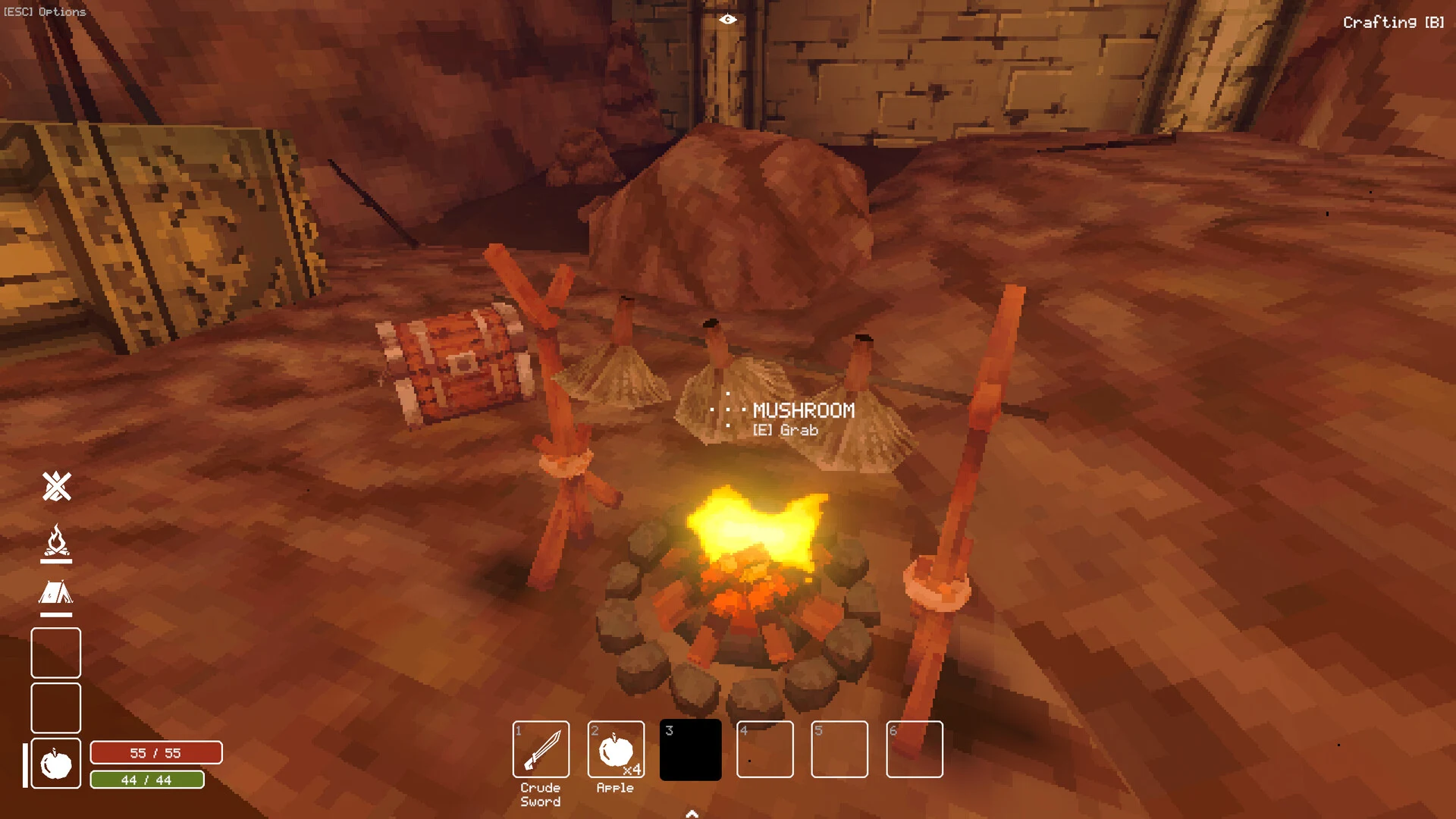
- Iron Key opens locked doors and chests that block progression in Deep Dish Dungeon's handcrafted dungeon.
- Search first: The key is typically found near the locked route it opens, so explore side rooms carefully.
- Metroidvania structure: If no key is nearby, note the location and return later with new abilities.
- Official release: The full game launches October 13, 2026, so key details may expand at launch.
- Preparation matters: Carry recovery food and tools before hunting locked areas.
Understanding the Iron Key in Deep Dish Dungeon
Deep Dish Dungeon is a dungeon exploration and survival crafting game from Behold Studios and Raw Fury, built around handcrafted rooms, environmental puzzles, resource gathering, cooking, and Metroidvania-style progression. Locked doors and keys like the Iron Key fit into this loop as gating mechanics: they reward players who explore thoroughly instead of rushing toward the next objective.
Before hunting for the key, watch the official overview trailer for a quick look at how exploration and interaction work.
Video Highlights:
- Handcrafted dungeon spaces with branching routes and side rooms
- Environmental interaction is central to progression
- Exploration, cooking, and crafting feed into each other
- Solo play or co-op with up to two friends
Locked routes in this style of game are designed to make you explore the surrounding rooms first. If a door needs an Iron Key, the solution is usually within a few connected rooms, not at the other end of the dungeon.
Where to Look for the Iron Key
Because the full game releases on October 13, 2026, exactly named key locations may shift between the demo and launch versions. Use this search framework instead of fixed coordinates — it applies to any locked door you encounter.
| Search Target | What to Check | Likelihood |
|---|---|---|
| Side rooms near the locked door | Chests, crates, shelves, interactive objects | ★★★★★ |
| Puzzle rooms | Solve mechanisms first, reward may follow | ★★★★ |
| Enemy-dense chambers | Clear threats, then loot the area | ★★★ |
| Dead-end corridors | Easily skipped corners and gaps | ★★★ |
| Previously cleared areas | Return after gaining new abilities | ★★★★ |
Nearby Side Rooms
- Highest priority target
- Check every interactive container
- Look behind breakable objects
Environmental Puzzles
- Observe symbols and switches
- Solve the room's mechanism
- Rewards often include access items
Revisit Later
- Note the locked route mentally
- New abilities open old paths
- Backtracking is part of the loop
Details from the Steam demo may not match the release version. Treat demo key locations as directional hints, and verify against the official Steam page after the October 13, 2026 launch.
Step-by-Step: Using the Iron Key
Follow this workflow whenever you find a locked door or a key item during a run.
Confirm the Lock Type
Approach the locked door or chest and interact with it. Note the on-screen prompt — if it references a key or specific item, that is your target. Do not force the route with combat or other tools.
Search the Connected Rooms
Sweep every room directly connected to the locked door first. Check containers, corners, and any object highlighted by the interaction system. Thorough local searching resolves most key requirements.
Solve Nearby Puzzles
If local rooms come up empty, look for unsolved environmental puzzles in the area. Mechanisms, switches, and symbol matching frequently gate access to reward rooms containing keys.
Use the Key on the Lock
Return to the locked route with the Iron Key in your inventory and interact again. Prioritize opening routes that advance your main objective rather than side storage areas.
Loot and Record Progress
Clear the newly opened area, gather resources, and mark any additional locked routes you spot for later runs.
Before a key-hunting run, cook recovery food and craft practical tools. Health and stamina management determines whether an extended search succeeds.
Locked Route Types and Priorities
Not every locked route deserves the same urgency. Use this comparison to decide where to spend your Iron Key first.
| Route Type | Typical Contents | Open Priority |
|---|---|---|
| Progression door | New dungeon area, main path forward | Highest |
| Reward chest | Resources, crafting materials | High |
| Storage room | Food ingredients, reserve supplies | Medium |
| Secret room | Bonus loot, hidden passages | Medium |
| Shortcut door | Fast route back to camp | Situational |
A shortcut door that loops back toward your camp is often worth opening early. Easier retreat routes reduce the risk of losing progress on a deep run.
Exploration Checklist for Locked Areas
Before and After Using the Iron Key:
- Interact with the locked door to confirm the required item
- Sweep all connected side rooms for containers and clues
- Solve nearby environmental puzzles before backtracking far
- Cook recovery food before an extended search run
- Record any additional locked routes for future visits
In co-op (up to 3 players), split up to sweep connected rooms in parallel and share observations before committing resources. One player can hold enemy attention while another searches safely.
FAQ
Q: Where exactly do I use the Iron Key in Deep Dish Dungeon?
The Iron Key is used on locked doors or chests that mention a key requirement when you interact with them. Search the rooms directly connected to the lock first — the key is usually found nearby rather than in a distant area. Exact named locations may differ between the demo and the full October 13, 2026 release.
Q: Can I open locked doors without the Iron Key?
Locked routes in Deep Dish Dungeon are intended to be opened through the correct item, puzzle solution, or ability. If you lack the key, note the location and continue exploring — the Metroidvania-style progression means new abilities and items can open old paths later.
Q: What should I do if I find a key but no locked door?
Keep the key in reserve and continue your route. Inventory space permitting, hold onto access items until you either find their matching lock or finish the run. Unused keys often match routes in branches you have not fully explored yet.
Q: Does co-op change how key hunting works?
Yes. In co-op, players can divide rooms to search in parallel and communicate findings before using limited items. Agree on which locked route to prioritize before spending the key as a group.