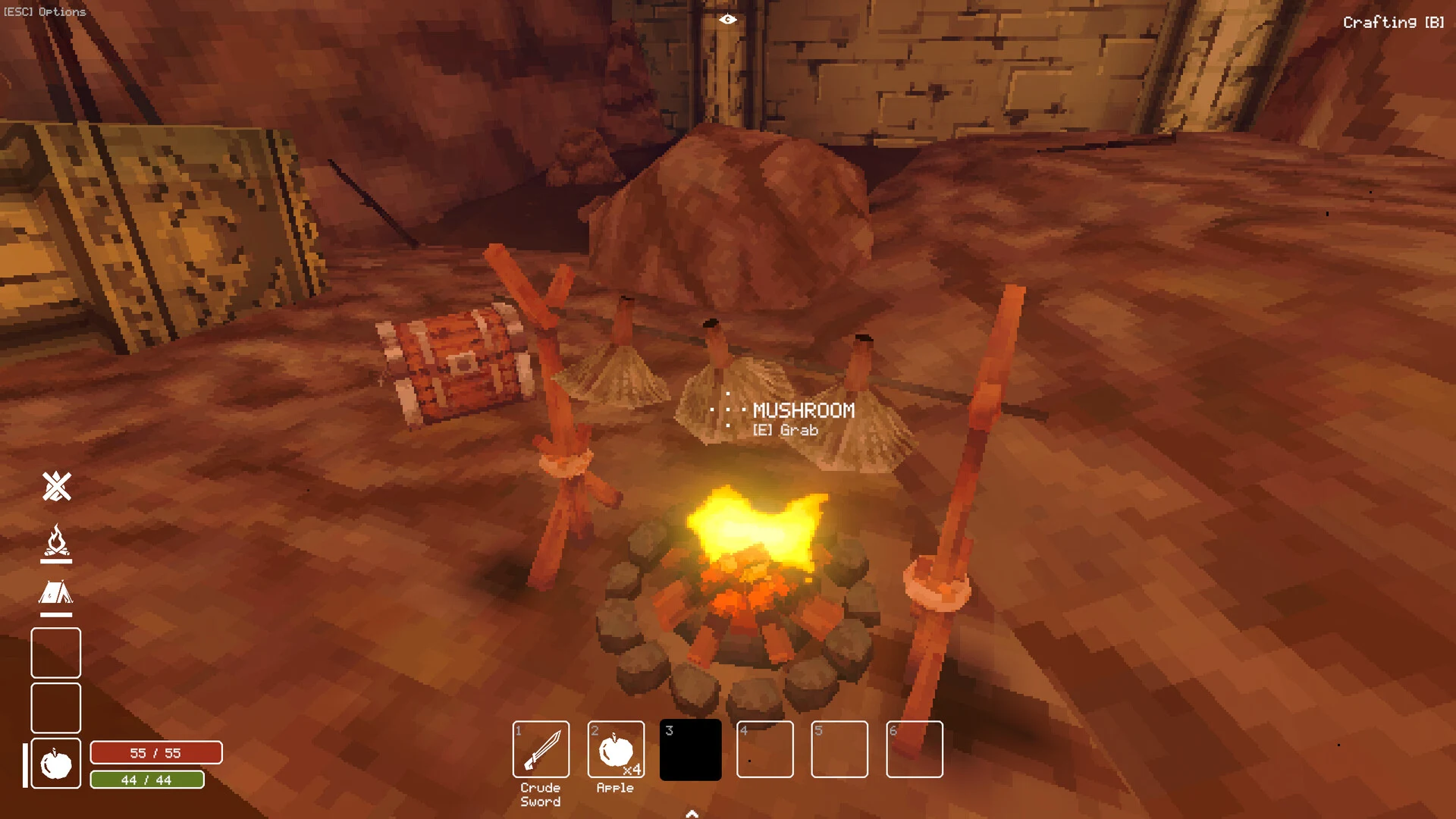
- Cutting roots in Deep Dish Dungeon requires the proper bladed tool before overgrown barriers become interactive.
- Roots are environmental obstacles: they block side paths and hidden rooms rather than acting as enemies.
- Check tool durability before a cutting run; blunted tools slow progress on dense root walls.
- Return later if blocked: many root walls appear before you own the right tool, following Metroidvania-style progression.
- Co-op tip: one player can cut while others watch for enemies in overgrown areas.
Understanding Root Obstacles in Deep Dish Dungeon
Deep Dish Dungeon is a handcrafted dungeon exploration and survival game from Behold Studios and Raw Fury, built around environmental puzzles, gathering, crafting, and cooking. Among its recurring environmental obstacles, tangled roots and overgrown plant walls frequently seal off side rooms, shortcuts, and resource-rich alcoves. Learning how to cut roots efficiently is one of the first real progression hurdles new players face, because the game deliberately places some root barriers in areas you can reach before you have the means to clear them.
This follows the game's ability-based, Metroidvania-like structure: when a route looks inaccessible, the correct response is to remember the location, continue exploring, and return once you have crafted or unlocked the right tool.
Video Highlights:
- Official overview of the dungeon exploration and puzzle loop
- How environmental obstacles gate progression
- Examples of blocked routes that open later in the run
Before attempting to cut a root wall, inspect the surrounding room. Roots near switches, symbols, or cooking stations are often puzzle elements rather than simple barriers.
Tools You Need to Cut Roots
Roots in Deep Dish Dungeon respond to bladed and edged tools. Attempting to break them by hand or with the wrong tool wastes time and, in some cases, tool durability. The table below summarizes the common options and when to use each.
| Tool Type | Cuts Roots | Best Use Case | Durability Concern |
|---|---|---|---|
| Basic bladed tool | Yes, thin roots | Early small root clusters | Low durability, breaks quickly |
| Upgraded blade | Yes, all roots | Dense root walls and repeated use | Moderate, watch heavy sessions |
| Improvised edge | Thin roots only | Emergency shortcut clearing | Very low, craft spares |
| Torches / blunt tools | No | Light, hazards, cooking | Not effective on roots |
Do not burn a fresh blade on a root wall you may not need to clear yet. If the route behind it is optional, clear required paths first and return when fully stocked.
Early Run
- Basic blade only
- Cut thin roots
- Prioritize main-path barriers
Mid Run
- Upgraded blade
- Clear dense root walls
- Open side rooms and shortcuts
Prepared Expedition
- Spare blades stocked
- Clear optional areas
- Combine with cooking for stamina
Step-by-Step: How to Cut Roots
Follow this workflow whenever you encounter a root barrier. It keeps tool use efficient and avoids getting stranded deep in the dungeon with a broken blade.
Locate the Root Barrier
Survey the room and confirm the roots fully block the route. Check for alternate paths or puzzle mechanisms nearby before committing to cutting.
Equip the Right Bladed Tool
Open your inventory and equip a bladed tool suitable for the root thickness. Thin vines can fall to a basic blade; dense root walls usually need an upgraded edge.
Clear Enemies First
Overgrown areas often host threats. Deal with nearby enemies before starting, since cutting animations leave you exposed to attack.
Cut the Roots at the Base
Interact with the root cluster and target the base where the stems bundle together. Cutting at the base typically clears the whole cluster faster than attacking stray vines.
Mark and Revisit Hard Barriers
If the roots do not respond, you likely lack the required tool tier. Remember the spot on your mental map, continue exploring, and return after upgrading.
Cutting dense roots drains stamina. Prepare stamina-supporting food before a run that includes heavy clearing, and rest between clusters instead of chaining cuts while exhausted.
Roots in Co-op Runs
In cooperative play with up to three players, root clearing becomes a team task. Divide roles so the player with the best tool handles cutting while teammates cover the room.
| Role | Responsibility | Key Tip |
|---|---|---|
| Cutter | Equips blade, clears roots | Communicate durability status |
| Guard | Watches enemies and hazards | Call out threats during cut animations |
| Scout | Checks the room beyond the barrier | Confirm the route is worth the tool cost |
Discuss who carries spare blades before the run. Losing the party's only cutting tool deep in the dungeon can force a full retreat.
Root-Cutting Expedition Checklist
Before heading into root-heavy sections of the dungeon, run through this preparation list.
Before Cutting Roots:
- Craft or equip a bladed tool suited to root thickness
- Pack one spare blade for deep expeditions
- Prepare stamina-supporting food at camp
- Clear nearby enemies before starting cuts
- Note any roots that resist cutting for a later return
After returning to camp, review what was cut, what blocked you, and which materials ran short. Adjust the next crafting plan accordingly, even if the run did not reach a new area.
FAQ
Q: How do I cut roots in Deep Dish Dungeon?
Equip a bladed tool, clear nearby enemies first, then interact with the root cluster and cut at the base where the stems bundle together. Thin vines fall to a basic blade, while dense root walls generally need an upgraded edge.
Q: Why can't I cut a root wall even with a blade?
Deep Dish Dungeon uses ability-based progression. Some root barriers are tiered so they only respond to better tools you craft later in the run. Mark the location, keep exploring, and return once your equipment improves.
Q: Does cutting roots use tool durability?
Yes. Cutting dense root clusters consumes blade durability, which is why you should clear required paths first and avoid burning fresh tools on optional side rooms.
Q: Can co-op teammates help cut roots faster?
In co-op, assign one player as the cutter with the best blade while others guard the room and scout beyond the barrier. Coordinate resource use so the party keeps a spare blade in reserve.