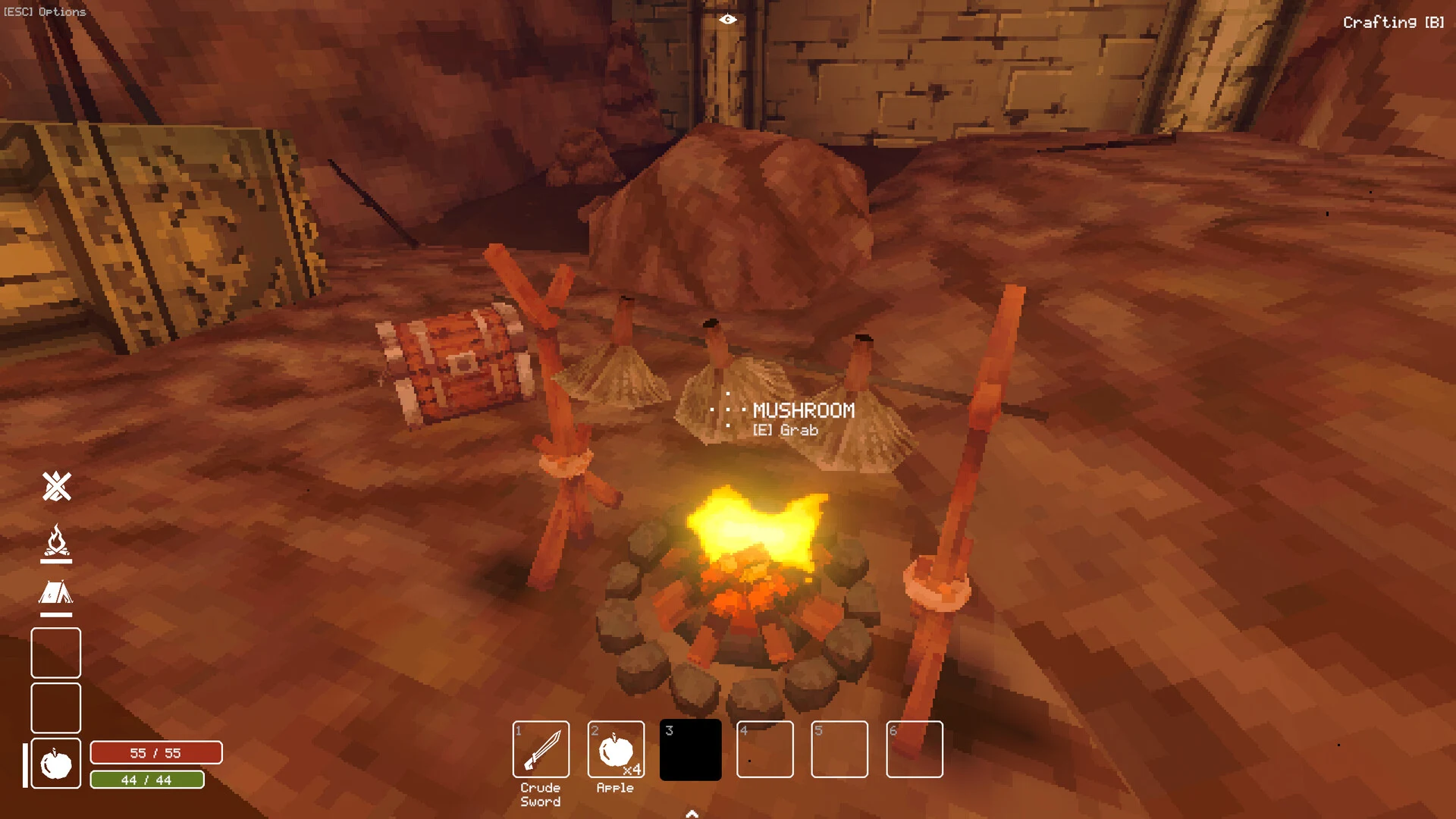
- Camp and cook is the core preparation loop: gather ingredients, set up camp, cook meals before pushing deeper.
- Food affects health and stamina, so meals shape how far each dungeon run can go.
- Cook before dangerous sections, not after taking damage mid-fight.
- Keep a reserve of ingredients and recovery food instead of spending everything immediately.
- Co-op teams should assign cooking and resource roles before entering unfamiliar rooms.
Why Camping and Cooking Matter in Deep Dish Dungeon
Deep Dish Dungeon combines handcrafted dungeon exploration with survival systems, and the camp-and-cook loop is where preparation happens. During each run you gather materials and ingredients along explored routes, then convert them at camp into food that supports health and stamina. Meals are especially valuable before combat-heavy rooms, puzzle chains, or longer expeditions into unfamiliar branches.
Progression is not only about combat. New abilities open previously blocked routes, but your ability to stay in the dungeon long enough to find them depends on how well you manage food and supplies between pushes.
Video Highlights:
- Official overview of the exploration, gathering, and cooking loop
- How meals support health and stamina during longer runs
- Camp preparation before committing to deeper areas
Treat cooking as part of route planning, not an afterthought. A meal prepared at camp before a hard section is worth more than the same ingredients wasted on a route you already cleared.
Camp Setup and the Preparation Cycle
A camp is your safe preparation area between dungeon pushes. The strongest routine cycles through gathering, returning, cooking, crafting, and setting out again with a clear objective.
Gather while exploring
Collect ingredients and materials as you move through rooms and side paths instead of treating collection as a separate trip. Check areas near environmental puzzles for extra resources.
Return to camp before deep pushes
When supplies are adequate or health is low, retreat to camp rather than pushing into unfamiliar territory. Note blocked routes along the way for later.
Cook for the next objective
Convert ingredients into food matched to what is ahead: recovery meals for combat routes, stamina-supporting meals for traversal and puzzle-heavy sections.
Craft practical supplies
Use remaining materials on tools or supplies that solve the current obstacle, while keeping a reserve for future recipes.
Reassess after every run
Review what was consumed, what blocked progress, and what was scarce. Adjust the next cooking and crafting plan accordingly.
Do not spend every material and ingredient the moment it enters your inventory. Later recipes and deeper exploration both depend on reserves kept at camp.
Food Types and When to Cook Them
Different situations call for different meals. Use this reference to match food preparation to the route you are about to attempt.
| Food Category | Best Time to Cook | Main Purpose | Practical Tip |
|---|---|---|---|
| Health-focused meals | Before combat-heavy routes or after damage | Support health management, allow room for mistakes | Keep recovery food on hand, do not eat it all at once |
| Stamina-focused meals | Before traversal or puzzle chains | Support repeated movement and ability-based travel | Choose these when navigation, not combat, is the challenge |
| Balanced meals | Before mixed-objective expeditions | Cover both health and stamina needs | Carry a balanced selection when a route has varied challenges |
| Exploration rations | Before long expeditions into new branches | Sustain extended time away from camp | Prepare extra before entering unfamiliar territory |
| Emergency reserve | Kept at camp, not carried | Guarantee recovery options after a failed run | Restock immediately after consuming reserves |
Combat Push
- Health recovery focus
- Cook before the fight, not during
- Keep a reserve for retreats
Puzzle Route
- Stamina support focus
- Sustains repeated interaction and movement
- Pairs well with observation-first play
Deep Expedition
- Balanced rations
- Covers mixed combat and traversal
- Plan the return route to camp
Match the meal to the mission. Ask what the next section demands most, health, stamina, or endurance, and cook for that specific need.
Ingredient Gathering Routes and Priorities
Ingredients are found throughout the dungeon as you explore rooms, paths, and resource-rich areas. Consistent gathering keeps future cooking options open; waiting until supplies are nearly empty forces risky trips.
| Gathering Priority | Ingredient Type | Where to Look | Storage Advice |
|---|---|---|---|
| High | Recovery-oriented ingredients | Side rooms and paths near combat areas | Keep a steady reserve at camp |
| High | Stamina-supporting ingredients | Traversal-heavy and puzzle branches | Stock before navigation-heavy runs |
| Medium | Versatile common ingredients | Along any explored route | Gather consistently, use deliberately |
| Medium | Rare ingredients | Hidden areas and less direct paths | Save for meals that solve real problems |
| Low | Redundant duplicates | Already-cleared sections | Use or convert rather than hoarding |
Rooms with unusual gaps, objects, or environmental changes often hide ingredients. Revisit rooms after solving nearby puzzles, since hidden areas are easiest to miss when moving quickly between objectives.
Co-op Camping and Cooking Roles
Deep Dish Dungeon supports solo play and online co-op with up to three players. In co-op, cooking and resource decisions should be discussed openly so the party preserves supplies for later rooms.
| Co-op Role | Responsibilities | Key Habits |
|---|---|---|
| Lead explorer | Chooses routes, marks unexplored exits | Communicate the plan before splitting up |
| Combat anchor | Draws enemy attention, protects the group | Avoid separating during dangerous encounters |
| Cook and quartermaster | Manages camp, meals, and shared supplies | Announce resource use before spending |
| Puzzle scout | Inspects rooms, shares environmental clues | Compare observations before interacting |
Agree on a shared route before entering a new section, and communicate before consuming limited healing food or combat supplies. Uncoordinated spending is the fastest way to strand a co-op party far from camp.
Before Every Deep Push:
- Gather ingredients along the current route
- Return to camp with adequate supplies
- Cook meals matched to the next objective
- Craft tools that solve the immediate obstacle
- Confirm reserves for retreat and recovery
FAQ
Q: How does the camp and cook loop work in Deep Dish Dungeon?
You gather ingredients and materials while exploring the handcrafted dungeon, return to camp as a safe preparation area, cook meals that support health and stamina, and craft supplies before pushing into deeper sections. Each run should improve the next preparation cycle.
Q: What do meals actually do?
Cooked food supports health and stamina management. Health-focused meals help during combat-heavy routes, while stamina-focused meals suit traversal, puzzles, and extended movement. Choose food based on what the next section demands.
Q: Should I cook everything as soon as I gather it?
No. Keep practical reserves instead of converting every ingredient immediately. A small stockpile at camp keeps future runs flexible and guarantees recovery options after a failed push.
Q: How should co-op teams handle cooking?
Assign a cook or quartermaster role, communicate before using limited supplies, and coordinate cooking at camp before entering unfamiliar rooms. Discuss resource decisions openly so the party preserves supplies for later encounters.